What the Snell Isle Median Doesn't Tell You: The 49% Rule, Seawalls, and What Your Waterfront Dollar Buys in 2026
August 6, 2026
August 6, 2026
Two homes closed on Snell Isle within two weeks of each other this June. One traded at $585,000. Another traded at $2,900,000. Both sit on the same 300-acre peninsula, both cross the same bridge to Beach Drive, both look at the same water. The median price you read on a portal is the arithmetic mean of these two realities, and the arithmetic hides the mechanism that actually determines which one your dollars will buy.
If you have already decided that Snell Isle belongs on your short list, the useful conversation is not about lifestyle. It is about how the City of St. Petersburg's substantial-improvement rule, base flood elevation, and seawall condition quietly re-sort the entire inventory into two markets pretending to be one.
Post-Helene and post-Milton, Snell Isle behaves less like a single neighborhood and more like two overlapping ones. Elevated, storm-hardened homes with recent seawall work continue to move at strong prices. Mid-century structures below current base flood elevation sit longer and settle lower, often trading close to lot value.
A sampling of Snell Isle sales that closed in June 2026 makes the split visible:
| Address | Sold | Beds/Baths | Approx. sq ft | Price |
|---|---|---|---|---|
| 440 Lido Way NE | Jun 26, 2026 | 4/4 | 3,650 | $2,900,000 |
| 140 Miramar Blvd NE | Jun 15, 2026 | 4/3 | 2,528 | $2,575,000 |
| 1365 Snell Isle Blvd NE #8D | Jun 18, 2026 | 4/3 | 2,849 | $2,250,000 |
| 1180 Cordova Blvd NE | Jun 12, 2026 | 5/6 | 4,849 | $1,700,000 |
| 3301 Maple St NE | Jun 30, 2026 | — | 1,940 | $1,425,000 |
| 131 Miramar Blvd NE | Jun 12, 2026 | lot | — | $905,000 |
| 746 31st Ave NE | Jun 8, 2026 | — | — | $715,000 |
| 3324 Walnut St NE | Jun 25, 2026 | 2/2 | 1,200 | $585,000 |
Snell Isle's reported median sat near $1.5M entering 2026, with days on market running roughly 89 to 134 depending on the source. Neither number is wrong. Both average across two very different transactions: the compliant, elevated, insured-at-a-reasonable-premium home, and the older structure whose next owner will either raise it, gut it against a code threshold, or take it down.
The mechanism that separates those two markets is the City of St. Petersburg's application of the FEMA substantial-improvement threshold. Most of Snell Isle sits in FEMA AE or VE flood zones, and the rule works like this:
A worked example on a $1.5M-structure home leaves roughly a $735,000 improvement budget before the whole home has to be brought to current base flood elevation. That sounds like plenty of headroom until you realize a full-scope waterfront renovation on the island frequently lands there. On a mid-century home valued at $400,000 structure-only, the threshold is closer to $196,000, and one significant kitchen-plus-primary-suite scope crosses it.
Crossing the line does not end the project. It changes what the project is. The finished floor has to sit at or above base flood elevation, which typically means raised slabs, breakaway garages, and reworked utilities. Custom Snell Isle builds today generally price at roughly $400 to $800 or more per square foot for construction alone, with fully elevated waterfront builds sitting toward the top of that range. Once you accept that math, the reason the $585,000 sale exists becomes obvious: at that price the buyer is not buying a house, they are buying a lot with a legally optional structure on it.
One local design-build firm summarizes the current permitting posture bluntly, noting that after Helene and Milton the city has been notably stricter on substantial-improvement determinations for tear-down versus renovation decisions. That is the practical background against which every offer on an older Snell Isle home should be written.
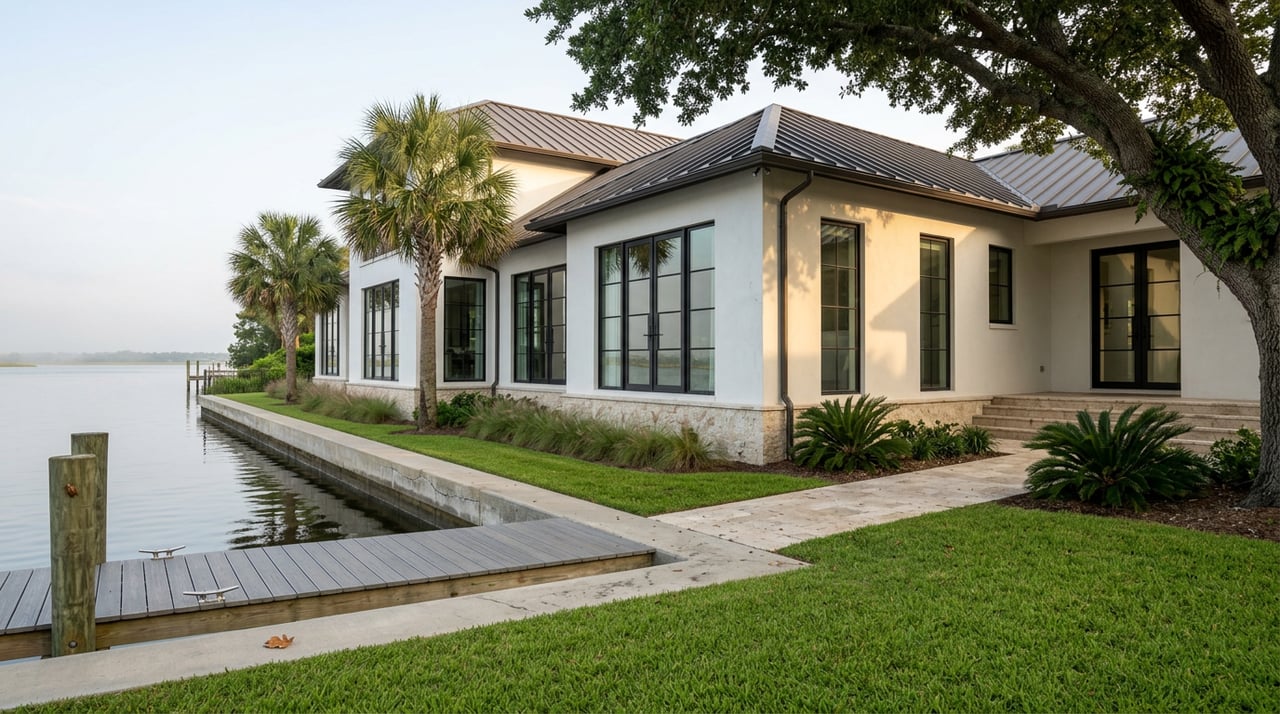
The second thing the median hides is the shoreline. Snell Isle's waterfront lots line Coffee Pot Bayou, Smacks Bayou, and Tampa Bay proper along Brightwaters Boulevard. The homes look similar from the street. The seawalls behind them do not.
A functioning seawall in this market is not a feature. It is a prerequisite. A failing one is a five- or six-figure conversation that has to happen before design, not after. Signs a wall needs attention include cracks in the cap, panels leaning or bowing toward the water, sinkholes forming in the lawn behind the wall, and visible erosion at the waterline. Waterfront contractors working the island will manage permit applications through both the City of St. Petersburg and Pinellas County, which is the practical answer to who signs off on what.
Dock work follows a parallel path. New docks and rebuilt structures in tidal waters generally require permits through Pinellas County's Water and Navigation section plus, in many cases, U.S. Army Corps of Engineers programmatic authorization. Minor board-replacement type repairs often do not trigger a permit. Replacing pilings, extending a dock, or rebuilding sections typically does.
There is also a wrinkle unique to Snell Isle that catches buyers coming from Historic Old Northeast. Snell Isle is not a historic district. No Certificate of Appropriateness is required for exterior modifications, which speeds up cosmetic work. In exchange, waterfront AE-zone properties are subject to the 49% cumulative rule on every permitted project. Faster on the outside, stricter on the envelope.
The friction on this island is knowable. It is not knowable from the listing sheet. A workable due-diligence sequence on a Snell Isle target looks like this:
None of these steps require special access. They require asking in the right sequence, ideally before the inspection period is halfway spent.
Is there an HOA on Snell Isle?
There is no mandatory island-wide HOA. The Snell Isle Property Owners Association is voluntary and focuses on advocacy and beautification. Certain sub-communities, such as Vinoy Place, carry their own governance, so read the specific parcel's documents.
Does the Renaissance Vinoy Golf Club affect what I can build?
Lots along the Vinoy Golf Club frontage carry additional view-corridor and setback considerations administered through the club, and these run in parallel with the city's normal review. Plan for a longer design timeline on those parcels.
Where does the median come from if the range is this wide?
From averaging elevated, code-compliant homes against older stock priced closer to lot value. The number is accurate. It is not descriptive of any specific property you can actually buy.
Is flood insurance required?
If the property sits in a Special Flood Hazard Area and you are using a federally backed mortgage, flood insurance is required. Cash buyers can decline it, though most lenders and insurers on the island will still ask for an elevation certificate before writing a companion homeowners policy.
How long does a substantial rebuild take?
Local design-build teams working on Snell Isle typically quote 22 to 30 months from a signed design agreement to certificate of occupancy on a full estate, with waterfront sites that need new seawalls, docks, or significant elevation changes running toward the longer end.
The Snell Isle median is a real number. It is also a poor description of the decision in front of you. The homes above the median and the homes below it are not degrees of the same thing. They are two different transactions with two different follow-on obligations, and the number the portals publish averages them into a figure that belongs to neither.
If you are weighing an offer on the island and want a read on which side of that line a specific address sits, along with the seawall, permit, and elevation questions to raise before you sign, Shirley Rigo has been working this market since 1984. Let's Connect.
Stay up to date on the latest real estate trends.
Experience personalized service, local insight, and a results-driven approach backed by more than four decades of success in the St. Petersburg market.
SHIRLEY RIGO, PA
235 7TH AVE NE ST PETERSBURG, FL 33701