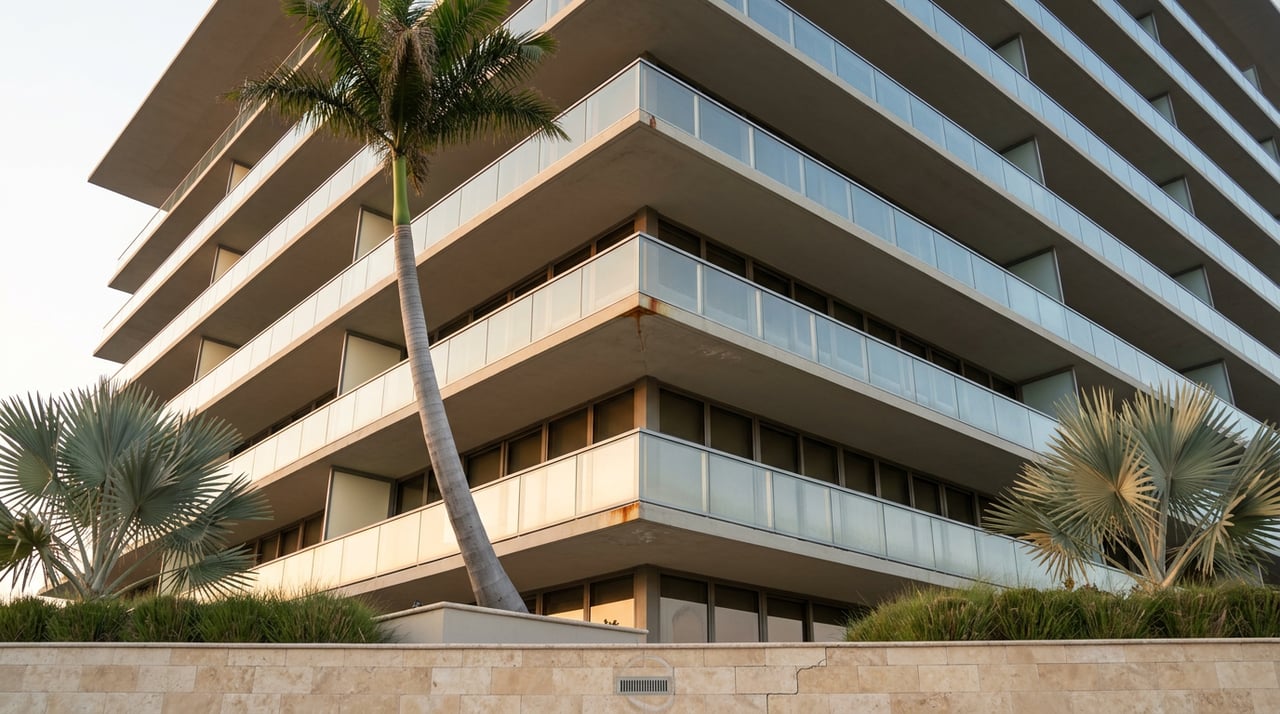
The Downtown St. Pete Condo Question That Matters More Than Year Built
August 13, 2026
August 13, 2026
In the summer of 2024, St. Petersburg's building official manager stood before city council with a backlog that should have worried anyone shopping for a condo downtown. More than 200 buildings in the city needed a state-mandated structural inspection, and most hadn't finished. Don Tyre explained the holdup wasn't paperwork. "There's only so many engineering firms that do this work," he told council members that July, describing a scramble that stretched across 225 buildings within three miles of the coast.
That bottleneck is mostly behind us. What isn't behind us, and what's actually reshaping downtown's condo market right now, is the second half of the law Tyre was describing back then. The inspections were the easy part. The money is the hard part, and 2026 is the year the money question stopped being optional.
For decades, Florida condo boards had a legal escape hatch. If a reserve study said a roof or a parking structure needed a million dollars in repairs down the road, owners could vote to underfund that line item, or skip it entirely, and keep monthly dues flat. Plenty of boards took that vote more than once.
As of January 1, 2026, that option is gone for the structural components covered by a Structural Integrity Reserve Study. Associations in buildings three stories or taller can no longer vote to waive or reduce those reserves for budgets adopted on or after December 31, 2024, and even associations with older budgets had to start funding according to their reserve study by the same January 1, 2026 deadline. If the SIRS says a building needs to be setting aside six figures a year toward concrete restoration, the association has to actually save it now.
That single change is why some downtown owners are opening HOA statements this year that look nothing like what they signed up for.
Here's where the story gets useful for anyone comparing listings. The dollar amount attached to a building's post-inspection reckoning has less to do with the year it was built and more to do with what its board chose to do in the years before this rule took effect.
Two downtown names keep coming up in deal conversations right now. Signature Place, near Beach Drive, was hit with an $8.7 million assessment after inspections turned up building problems, according to Tampa Bay Times reporting. Bayfront Tower could be facing renovation costs as high as $45 million once its post-Surfside findings are fully accounted for, the paper also reported. Both are established, well-located downtown addresses. Both had boards that, like most Florida associations before 2022, had the legal room to defer full reserve funding, and used it.
Compare that to the buildings going up right now. Art House, the 42-story Kolter Urban tower at 275 1st Avenue South, wrapped construction more than 90 percent sold. The Residences at 400 Central, the 46-story tower that's now the tallest residential building on Florida's Gulf Coast, began issuing move-in ready units on its lower floors this past winter. Neither building is anywhere near old enough to trigger a milestone inspection, which only kicks in once a building hits 30 years, or 25 in jurisdictions that adopted the earlier trigger for coastal exposure. But both still had to file a Structural Integrity Reserve Study, because that requirement is tied to a building's height, not its age. A brand new 40-story tower needs a SIRS on file just as much as a building from the 1980s does.
| Downtown building | Age profile | What's publicly known |
|---|---|---|
| Signature Place | Established high-rise | $8.7 million assessment after post-inspection findings |
| Bayfront Tower | Established high-rise | Up to $45 million in potential renovation costs after post-Surfside review |
| Art House | Newly completed | SIRS required by law based on height, no legacy reserve backlog |
| 400 Central | Newly delivered | SIRS required by law based on height, structural components are new |
The difference isn't whether the SIRS exists. It's what the SIRS finds. A new building's structural components haven't aged, so the required contribution is small relative to the building's size. An older tower with decades of salt air exposure and a board that voted no on reserves for a decade or more is walking into 2026 with a much bigger number and a much smaller cushion.
If you're comparing two downtown listings on price per square foot alone, you're comparing the wrong thing. A building's reserve history is doing more to determine your real cost of ownership than its finishes or its view ever will.
The reserve gap doesn't stop at the HOA statement. It shows up at the lender's desk. Fannie Mae maintains a list of condo projects it considers non-warrantable, meaning conventional financing isn't available to buyers there. Buildings land on that list for reasons that track almost exactly with what we've been describing: an incomplete milestone inspection, a reserve fund below required minimums, or a pending special assessment serious enough to affect the building's finances. Fannie Mae tightened its lender review standards again earlier this year, so a building that cleared review in 2024 isn't guaranteed to clear it now.
If a downtown building you're considering ends up on that list, your financing options narrow to portfolio lending or non-QM products, typically at a higher rate. That's a document check that needs to happen before you write an offer, not three weeks into your contract when the lender orders the condo questionnaire.
Florida's paperwork has caught up to this reality. Purchase contracts now have to state whether a building's milestone inspection, turnover inspection, or SIRS has been completed, and buyers are entitled to review those documents once provided, with a closing extension built in if they arrive late.
That's the floor, not the ceiling, of what you should be requesting. Before you write an offer on a downtown condo, or accept one as a seller, ask for:
Owners also have a real right to see these records. Florida law requires associations to produce official records within a set window of a written request, and larger associations now have to post key governing documents and budgets online. None of that replaces sitting down and actually reading the numbers before you close.
If you only have time to check one thing, check the reserve fund's percent-funded figure, not the year printed on the certificate of occupancy. A well-run older tower with a board that funded reserves responsibly can be the safer buy over a newer building whose association is still catching up on years of underfunding. Age is a proxy. The vote history is the real signal.
The same transparency cuts both ways. If your downtown unit sits in a building with a pending or recently completed special assessment, burying it in the listing remarks doesn't serve you. Buyers are reading these documents more carefully than they were three years ago, and pricing accordingly. Downtown St. Petersburg's median sale price sat around $1.5 million in February 2026, a figure pulled up by the concentration of new luxury towers, while the citywide median was closer to $500,000 in March 2026. That gap matters here because it means downtown buyers are financing larger loan amounts against buildings where the association's financial health has an outsized effect on total cost of ownership. Getting ahead of the assessment conversation, rather than hoping it doesn't come up during inspection, is what keeps a downtown listing moving.
Does a brand new condo tower need a SIRS if it's nowhere near 30 years old? Yes. The SIRS requirement is triggered by a building being three or more habitable stories, not by its age. A condominium finished this year still needs a Structural Integrity Reserve Study on file. The milestone inspection, which is separate, is the one tied to the 25 or 30 year age trigger.
If our association already voted to waive reserves years ago, are we stuck with the shortfall? The waiver itself is done, but the funding obligation isn't optional anymore. Associations had to begin funding their SIRS reserves according to the study starting January 1, 2026, regardless of past votes. What's left to negotiate is how the association closes that gap, through a special assessment, a loan, or a combination.
Can I still get a conventional mortgage on a downtown condo with a pending special assessment? Sometimes, but not always. If the building is flagged as non-warrantable, standard conventional financing is off the table and you're looking at portfolio or non-QM lending instead, usually at a higher rate. This is exactly why the condo questionnaire needs to happen early in your contract timeline, not late.
Downtown St. Petersburg's skyline is genuinely changing, and there's real opportunity in both the new towers and the well-managed older buildings around them. The part that never shows up in a listing photo is the association's financial history, and that's exactly where a second set of local eyes earns its keep. If you're weighing a downtown purchase or sale and want a straight read on a specific building's reserve and inspection status, Shirley Rigo has spent decades in this market and knows which questions to ask before you sign anything. Let's Connect.
Stay up to date on the latest real estate trends.
Experience personalized service, local insight, and a results-driven approach backed by more than four decades of success in the St. Petersburg market.
SHIRLEY RIGO, PA
235 7TH AVE NE ST PETERSBURG, FL 33701